Blog 1 – Reading biography

Youth literature, written for adolescents but adored by adults. Let me start with a fun fact. According to Ferguson (2019), 39% of youth literature is sold to adults, that’s wild! According to Jasper Rees (2003), adults love youth literature because of escapism and the feeling of freedom. The naïve part of these stories makes them feel comfortable and protected. Even though I’m not reading as much as I should my favorite books are autobiographies. Right now, I’m drawn to non-fiction books because I like to learn while reading. In my journey to pick up reading, I discovered some great youth fiction books. My weekly blogs will inform you about these findings. But first, let me go back to where I started. How I started reading and what stories inspired me to keep on reading.

My love for reading started when I was a little girl. I can remember the bedtime stories like The Rainbow Fish, Jip en Janneke, Nijntje and Dikkie Dik. As a child, I liked books with colorful illustrations and repetitive stories. The repetitiveness of these stories makes them easy to remember. I figured this out as a kid and applied my new learned skill at my daycare. This is how I impressed my peers by acting as I could read.

At school, we learned to read out of AVI books. These books are categorized into levels. The class got spitted into 4 groups with each a different reading level. I cannot remember my favorite book, but I did enjoy reading these with my classmates.

As a pre-teen, I liked to read because I wanted to learn something new. According to Appleyard (1991) reading for pre-teens is a way of exploring an internal and is self-centered. Pre-teens want to learn about facts and opinions. I enjoyed reading non-fiction informative books from the school library. William van den Akker was my favorite informative writer. After reading all the books in the school library I decided it was time to step up my game. I started reading fiction.

When I was in eighth grade, I loved the book: En de groeten van groep 8 by Jacques Vriens. This book is part of a book series: groep 8 written for eighth-graders. The story of a class struggling with daily tasks and going on an adventure makes this book so relatable for children and fun to read. Other writers I adored are Roahl Dahl, Francine Oomen, Joke van Winkel, Carry Slee, Astrid Lindgren, Paul van Loon, Tosca Menten and Jan Terlouw, Erna Gianotten and Cok Grashoff etc. I am pretty sure I must have read all the books from the children section of my local library.

In my early years, I went to a Christian school and church. The first great literary book I read must have been the bible. The bible is the biggest and most popular literary piece of art ever created. There are multiple stories implied in one book and the writers use morals, symbolism, history, similes, metaphors to deliver their message to the readers.

I have been educated as a dancer. At the dance academy, it was required to know the most famous ballets. Most ballet choreographies are inspired by literature. According to van Leeuwen (2018), one of the leading writers Théophile Gautier who created Giselle was inspired by a Slavic legend about Wili’s written by the famous poet Heinrich Heines De l’Allemagne. This is how I started reading classic literature such as The Sleeping Beauty, Romeo and Juliet, and Cinderella.

After such a rich history of reading what made me decide to stop reading? There are multiple answers to this question. Some people are more directed to the stimulus of direct media like video games, movies, and tv. Do we get lazier or more practical? People are convinced this way of perceiving information is more efficient than just reading a book. Let’s figure out if they are right or if reading still has its charm. In the next couple of weeks, you can expect a weekly blog. Go on a journey with me and rediscover the fun of reading.

Bibliography

Appleyard, J. A. (1991). Becoming a reader: the experience of fiction from childhood to adulthood. Cambridge: Cambridge Univ. Press.

Ferguson, D. (2019, April 20). Why Harry Potter and Paddington Bear are essential reading … for grown-ups. Retrieved on March 20, 2020, from https://www.theguardian.com/books/2019/apr/20/adults-should-read-childrens-books-says-oxford-don-and-author

Getty Images (2017). Reading Habits of the Most Successful Leaders That Can Change Your Life Too [image]. Retrieved on from https://www.inc.com/marissa-levin/reading-habits-of-the-most-successful-leaders-that.html

Rees, J. (2003, November 17). We’re all reading children’s books [pdf]. Retrieved March 1, 2020, from https://hubl.hu.nl/archive/file/23621

Van Leeuwen, A. (2018, July 6). Herkomst van de ‘witte aktes’. Retrieved on March 1, 2020, from https://www.operaballet.nl/en/node/8296
Blog 4 – The search for identity, Miss Peregrine’s Home for Peculiar Children

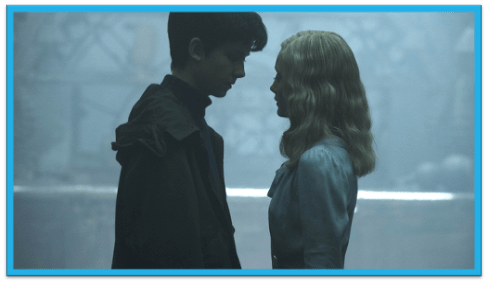
For this week’s blog, I read Miss Peregrine’s Home for Peculiar Children. Although this is a popular novel, the public might only recognize the title because of the film adaptation, which was directed by Tim Burton. Not that it matters, but in my opinion, the book outshines the movie. Therefore, I will elaborate on how this book includes the search for identity and age suitability, followed by the class discussion in which I describe the characters and setting of the book.

The theme of the week is the search for identity. A development that the protagonist undergoes is archetypical for adolescents and, therefore, relatable to the target audience. To develop his identity, like other adolescents, Jacob explores his independence and develops a sense of self, (Erikson, 1970). The principal character Jacob Portman, a typical 16-year-old American teenager from Englewood lives, according to his own words, a pretty boring life. During the week he goes to school, hangs out with his friend Ricky and works in his family’s store. After a plot shift, Jacob’s character changes. The protagonist feels lost, confused and depressed. He feels like an outsider, a person who doesn’t belong in Englewood. According to Erikson’s psychosocial development theory, these characteristics are part of human development and occur in the adolescent phase (12-18 years old). Erikson shows that when becoming older, people “transition from childhood to adulthood, they may have felt confused or insecure about themselves and how they fit into society” (Erikson, 1970. p. 4). They call this an identity crisis. “According to Erikson, an identity crisis is a time of intensive analysis and exploration of different ways of looking at oneself” (Hogeschool Utrecht, n.d., p. 2). And that is exactly what Jacob is going through. Throughout the story, Jacob is constantly searching for his identity. Moreover, he feels like adults don’t understand him. To illustrate, when the narrator talks about his 16th birthday party, which normally is a big deal to an American teenager.

“I could not have been less in the mood for a party. (..) I’d begged them to skip the party this year because, among other reasons, I couldn’t think of a single person I wanted to invite, but they worried that I spent too much time alone, clinging to the notion that socializing was therapeutic” (Riggs, 2016, p. 56).

This example demonstrates typical behavioral traits of adolescents such as rebellion, isolation, and mood swings, (Appleyard, 1991). Which suits the target audience since adolescents prefer reading about characters who are real to life, characters that face similar problems in life and therefore are relatable, (Appleyard, 1991). Given that most adolescents face similar problems at a later stage, to have a better understanding of the book, I would recommend this book to adolescents aged from 14 to 18 years old.

In addition, the book is appealing to 14- to 18-year-old individuals because it combines their favorite genres. According to Appleyard (1991), girls like to read romantic stories and boys read adventure, science-fiction, war, and sports stories. Riggs included multiple elements such as science fiction, romance, adventure, and war. In the following example, Jacob reflects on his life as a time-traveler.

“Stars, too, were time travelers. How many of those ancient points of light were the last echoes of suns now dead? How many had been born, but their light had not yet come this far? If all the suns but ours collapsed tonight, how many lifetimes would it take us to realize that we were alone? I had always known the sky was full of mysteries but not until now had I realized how full of them the earth was” (Riggs, 2016, p. 342).

This example demonstrates that science fiction and adventure are included in the book. Therefore, the book is indeed very suitable for this target group.

Like other young adult literature, the book includes the literary genre of tragedy. In their search for truth and information, adolescents learn to understand how the real-world works. Therefore, this genre “suits the adolescent’s realization that the real world is not the green world of romance but a much darker and more dangerous place” (Appleyard, 1991, p.15). During class, we discussed how Jacob had to choose between two worlds. First, the orphanage, a safe and peaceful place where his friends lived. Or the actual world, a world that is described as dark and evil, a place with bad memories. Throughout the book, the protagonist struggles with this decision. Until the end, when he realizes that he much rather wanted to escape this world and life, he lives in the peaceful loop. Therefore, we concluded Jacob belongs in the loop since he also has a superpower and if he did not have a special gift, he would could never enter the world.

At last, while looking back on the story. I discovered a whole new theory about what could actually have happened to Jacob. Although his grandfather had recently passed away, he plays a fundamental role in Jacob’s life. To illustrate:

“Growing up, Grandpa Portman was the most fascinating person I knew. He had lived in an orphanage, fought in wars, crossed oceans by steamship and deserts on horseback, performed in circuses, knew everything about guns and self-defense and surviving in the wilderness, and spoke at least three languages that weren’t English” (Riggs, 2016, p. 12).

Seemingly, Jacob idolizes his grandfather. According to Jacob is his grandfather like a father to him. Although his father is still alive, he doesn’t feel like they are connecting on the same level. They do not share mutual interests. But the story gets more interesting after Jacob’s father reveals that grandpa’s stories weren’t exactly real. To illustrate:

“Compared to the horrors of mainland Europe, the children’s home that had taken in my grandfather must’ve seemed like a paradise, and so in his stories it had become one: a safe haven of endless summers and guardian angels and magical children, who couldn’t really fly or turn invisible or lift boulders, of course. The peculiarity for which they’d been hunted was simply their Jewishness. They were orphans of war, washed up on that little island in a tide of blood” (Riggs, 2016, p. 21).

This example could be foreshadowing what is going to happen to Jacob. In the beginning of the book Jacob discovers his grandfather, dead, on the ground. After finding his dead grandfather, he seems like a changed person. He is in shock and is sent to a doctor. Which makes me think that this is just a story about Jacob going insane and becoming like his grandfather. What do you think?

To conclude, in an age of confusion, this book shows how everyone can be perfect in their own way. And, that when you feel like an outsider you should embrace your weirdness. And that is, in my opinion, a welcome message when you are a struggling teenager.

Bibliography

Appleyard, J. A. (1991). Becoming a reader: the experience of fiction from childhood to adulthood. Cambridge: Cambridge Univ. Press.

Erikson, E.H. (1970). Reflections on the dissent of contemporary youth. International Journal of Psychoanalysis, 51, 11-22.

Google (n.d.). Miss Peregrine’s Home for Peculiar Children [image]. Retrieved on March 2, 2020, from https://www.google.com/search?q=Miss+Peregrine%27s+Home+for+Peculiar+Children&tbm=isch&ved=2ahUKEwjOhdqnp7PoAhWFNOwKHawIDu0Q2-cCegQIABAA&oq=Miss+Peregrine%27s+Home+for+Peculiar+Children&gs_l=img.3..35i39j0j0i67l8.73395.73395..74042…0.0..0.73.73.1……0….1..gws-wiz-img.23GDTwtw1l8&ei=Ohd6Xs6AN4XpsAeskbjoDg&bih=679&biw=1432#imgrc=0q78PtTMp0BcHM&imgdii=HTkJEGENIONUxM

Riggs, R. (2016). Miss Peregrine’s Home for Peculiar Children. Philadelphia, USA: Quirk Books.

Blog 3 – The age of innocence, The Secret Garden


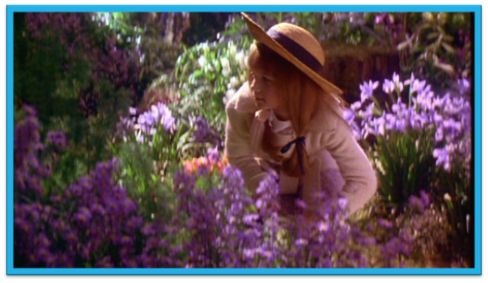
In my teenage years, I must have read this book a thousand times. The first time, when I was around 9 years old. Back then, I truly admired the writer’s capability of transporting the reader into another realm, a fantasy world of flowers and adventures. For one second, I would think I really was inside the Secret Garden myself.

This publication is essentially written for children. To be more precise, it falls under the category of juvenile literature. This genre is adored by pre-adolescents also known as school-age children, children from 7 to 12 years old, (Erikson, 1970 & Appleyard, 1991). In this stage, children essentially learn from external influences that teach them how to behave within set cultural and societal norms. For example, at school and from friends or books. In a similar manner, the book includes external influences that convey moral standards. To illustrate, the garden inspired Mary and Colin, the two main characters of the book, to become a better version of themselves. Furthermore, as a result of their personal change, the flowers in the garden start to bloom. In this example, the writer communicates that if you do well in life; you care about others and you behave politely, you will be rewarded. Thus, the book is suitable for a pre-adolescent audience since daily life situations are mirrored and therefore recognizable to the target group.

Moreover, the personal journey in which the protagonist Mary becomes more independent through self-exploration can be seen as typical pre-adolescent behavior. According to Appleyard (1991C) and Erikson (1970), the journey of becoming more independent and developing personal feelings is an archetype of pre-adolescent behavior and moreover, is related to the increased ability to organize and relate information. To illustrate: “give her simple, healthy food. Let her run wild in the garden. Don’t look after her too much. She needs liberty and fresh air and romping about” (Burnet, 2017, p. 76). Looking back at the previous statement, this example demonstrates how the book includes parental roles that encourage children to develop self-regulation in order to become more independent. Thus, because of Mary’s journey of self-exploration, she becomes relatable to the target group.

Another reason this book is suitable for pre-adolescents is because it contains a fairly elementary structure. Children like to read books with “repetition of the plot while constantly changing the setting” (Appleyard, 1991, p.5). To begin with, the novel includes repetition. To illustrate, in the story, Mary repeatedly visits the Garden, a place where new people and life are discovered. In addition, the characters are also quite simple. According to Appleyard, in juvenile literature, “characters are mostly ‘simple’ and use stereotypes to build the character. You can usually sum up the character in 3 characteristics” (Appleyard, 1991, p.16). The main characters Mary and Collin are presented in a similar way. To illustrate, according to the outcomes of the class discussion, Mary and Colin both are spoiled, self-centered, and unfriendly.

Furthermore, this novel is packed with symbolism. To illustrate, at the beginning of the story, Mary was removed from her toxic environment and had to start all over again. She goes on a trip to discover a new area which symbolizes her change and personal growth. To illustrate, at the beginning of chapter 10, the narrator explains that Marry feels like she doesn’t want to sleep anymore.

“She had no intention of going to sleep, and, in fact, she was becoming wider awake every day which passed at Misselthwaite. She was beginning to like to be out of doors; she no longer hated the wind, but enjoyed it. She could run faster, and longer, and she could skip up to a hundred. The bulbs in the secret garden must have been much astonished. Such nice clear places were made round them that they had all the breathing space they wanted, and really, if Mistress Mary had known it, they began to cheer up under the dark earth and work tremendously. The sun could get at them and warm them, and when the rain came down, it could reach them at once, so they began to feel very much alive” (Burnet, 2017, p. 57).

In this case, not wanting to sleep doesn’t refer to physical sleep but more like a mental sleep. Since Mary’s growing appreciation for the difficulties that life brings, she no longer hates the outdoors. Looking at the context, the outdoors could also be a symbol for the unknown world or something out of your control. 

During class, we discussed how this book belongs to the category juvenile adventure. Although, it isn’t a conventional “fairytale, animal fable, mystery nor mythic fantasy” (Appleyard, 1991, p.3) book, it is a good representation of juvenile literature because of its simple historically realistic storyline, uncomplicated characters, self-exploration and repetition. Moreover, the story is told from a third-person omniscient point of view. Which according to Wiehardt (2019), helps the reader to identify with the narrator since information about the feelings and thoughts of all characters are provided. Even though, at first, Mary’s character isn’t very appealing, after her change it is hard not to appreciate her perseverance. To conclude, The Secret Garden is an uplifting book about how personal growth can inspire others, and that, on their turn, can become a greater version of themselves as well.

Bibliography

Appleyard, J. A. (1991). Becoming a reader: the experience of fiction from childhood to adulthood. Cambridge: Cambridge Univ. Press.

Erikson, E.H. (1970). Reflections on the dissent of contemporary youth. International Journal of Psychoanalysis, 51, 11-22.

Kijk-goed (n.d.). The Secret Garden [image]. Retrieved on March 4, 2020, from https://kijk-goed.eyefilm.nl/films/the-secret-garden

Van der Wal & De Wilde (2017). Identiteitsontwikkeling en leerlingbegeleiding. Bussum: Coutinho

Blog 5 – Disillusion and disappointment, The Hunger Games


I read The Hunger Games for this week’s blog. This coming-of-age story is about Katniss Everdeen, a girl who lives in a dystopian world called Panem. As a result of a civil war, they divided the country into 12 districts and one Capital. Each district pays a commission to the Capital for protection. As a sanction for earlier rebellion against the Capitol, a lottery selected two adolescents to compete in an annual competition called the Hunger Games. That sounds exciting, doesn’t it? Well, in this week’s book review, I will elaborate on why I would recommend this novel to adolescents because of its theme, symbols, genre, and unifying idea.

The recurring themes of this story are disappointment, disillusion, and survival are suitable for an adolescent audience since it is equivalent to the self-perception of adolescents. According to Appleyard (1991), adolescents, aged from 12 to 18, are sensitive and feel misunderstood by the outside world. Moreover, “as they make the transition from childhood to adulthood, teens may begin to feel confused or insecure about themselves and how they fit into society” (Erikson, 1970, p.4). As a result, many young people in the search for their identity do not feel part of society. In a similar way, the principal characters of this publication express their feelings against popular culture and society. The books show that even though you have to face disappointments in your adolescent hood, with determination, you can still become a person who succeeds in life. While participating in The Hunger Games, Katniss fights to survive, shows courage, devotion, compassion, and makes sacrifices. Although she is portrayed as an outsider, because of her courage, they paint her as a heroine, “a central figure who by competence and initiative can solve the problems of a disordered world” (Appleyard, 1991C, p. 2). To illustrate:

“(..) This is upsetting me, and I don’t want to cry. When they televise the replay of the reaping tonight, everyone will make a note of my tears, and I’ll be marked as an easy target. A weakling. I will give no one that satisfaction” (Collins, 2009, p. 23).

This example shows despite obstacles, Katniss shows perseverance which could be linked to Erikson’s theory. Namely, he indicates a hero or heroine has a “strong sense of self and a feeling of independence and control” (Erikson, 1970, p. 4). Katniss’s character covers all heroic features and also is very popular among adolescents because in her daily life she seems to be a plane jane which anticipates the cognitive egocentrism phenomenon. To clarify, “adolescents want characters like themselves or their ideal selves, with inner lives, but those characters also have to be recognizable and therefore conventional by their standards” (Appleyard, 1991, p. 11). Therefore, due to Katniss’s heroic features but on the other hand, being conventional enough for adolescents to relate to, she is a very popular pop-culture character. Which adolescents nowadays, still idolize.

In addition, the most prominent symbol of the book which can also be seen as a recurring theme is a Mockingjay bird. To the public, this bird is important since they played a pivotal role during the rebellion.

“They’re funny birds and something of a slap in the face to the Capitol. (..) During the rebellion, the Capitol bred a series of genetically altered animals as weapons. They were homing birds, exclusively male, that were released into regions where the Capitol’s enemies were known to be hiding. After the birds gathered words, they’d fly back to centers to be recorded” (Collins, 2009, p. 42-43).

After the discovery of the Capital’s spying on them with birds, the rebellions came up with a return attack that made the birds useless. Therefore, the Capitol set them free, which resulted in them mating with female mockingbirds. A new breed arose, the Mockingjay bird. A breed that survived the Capitol and now, a symbol that represents rebellion.

Apart from this, the genre of the book suits the target group since dystopian stories are adored by most adolescents. According to Appleyard (1991), adolescents like this genre, because it corresponds to their world-view. Namely, “(..) the adolescent’s realization that the real world is not the green world of romance but a much darker and more dangerous place” (Appleyard, 1991, p.15). This realization is according to Erikson (1970) a direct result of the previous developmental stage. A pre-adolescent phase in which schoolchildren acquire new information about the world and its problems. Moreover, according to Nadworny (2017), the dystopian genre matches this world-view because it shows how messed up grownups are and how grownups ruined the world. For example, in the story, adults still believe in the magic of The Hunger Games.

Just like the short story The Lottery by Shirley Jackson, in The Hunger Games, people are restricted by traditions. Although young people would like to see change, people of age are more conservative, they averse to change or innovation. While adolescents are discovering their own identity, they form opinions and think for themselves about what they value in life. According to Appleyard (1991), young adults are drawn to books that make the reader think and reflect on life. The moral issues presented in the book push the readers to take their norms and values ​​into question and therefore, this book is a must for adolescents who are discovering their own identity.

During class, we discussed how Katniss changes the system and inspires others to stand up for what they believed in. This powerful message could make us reflect on current events and our society. For this reason, the statement ‘we can change the world’ could be seen as the underlying message of this book.

To conclude, the Hunger Games is an adventure story in which a heroine’s character is being tested. A book that covers the topics of disillusion and disappointment. Therefore, it comes as no surprise a great number of adolescents adore this book.

Bibliography

Appleyard, J. A. (1991). Becoming a reader: the experience of fiction from childhood to adulthood. Cambridge: Cambridge Univ. Press.

Erikson, E.H. (1970). Reflections on the dissent of contemporary youth. International Journal of Psychoanalysis, 51, 11-22.

Lionsgate Films (2019). A ‘Hunger Games’ Prequel Book Is Officially Coming Out In 2020 [image]. Retrieved on March 12, 2020, from https://www.bustle.com/p/a-hunger-games-prequel-book-is-officially-coming-out-in-2020-18009974

Nadworny, E. (2017, December 18). Why Teens Find Stories About The End Of The World So Appealing. Retrieved on March 20, 2020, from https://www.kqed.org/mindshift/49902/why-teens-find-stories-about-the-end-of-the-world-so-appealing

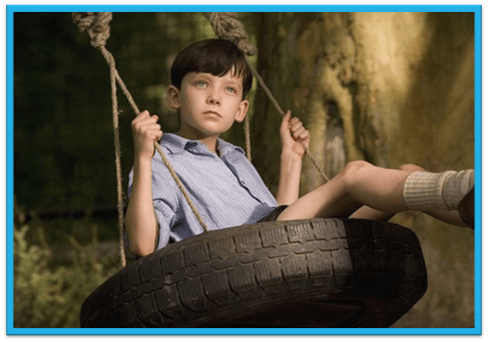
Blog 2 – Crossover, The Boy in the Striped Pajamas

You’re my best friend … My best friend for life” (Boyne, 2008, p. 213)

This week’s blog is about the book The Boy in the Striped Pajamas. A fictional Holocaust story about a forbidden friendship between Bruno and Shmuel in wartime Germany. Although they were both born on the same day, their lives appear to be so different. The boys’ story gives insight into a naïve or even child-like worldview during wartime, which is surprisingly super interesting.

Nowadays, books written for young adults are more grown-up than ever before. “The result is that the line between children’s fiction and adult fiction has blurred” (Rees, 2003, p.1). This crossover genre anticipates both young and adult reader’s needs. Similarly, Boyne’s novel blurs age-restricted lines, mainly because of the powerful but child-like narrative which is adored by YA and adults but more importantly, engages readers (Said, 2003 & Rees, 2003). To illustrate, the book is written in the third person omniscient point of view. Therefore, while reading, you will get to know the world according to Bruno’s descriptions of people and places which makes him a strong narrator. Nevertheless, most events are shown through the eyes of Bruno, a young boy with childish ignorance. During class, we discussed how readers of age can detect the underlying message and structural irony of the book. We concluded that since adults have a better understanding of the setting of the story, they can detect clues that younger readers might fail to notice. For example, the name of the new house Bruno moves to sounds like Auschwitz, Out-with which portrays the strongly present racism during World War 2.

However, crossover books can be written towards a specific audience. In this case, I think this book might be targeted towards a younger audience because of the literary genre and archetypal conflicts.

To start with, the literary genre is a tragedy and therefore, very suitable to just an adolescent audience (12- to 18-year-olds). “Tragedy is the literary genre that suits the adolescent’s realization that the real world is not the green world of romance but a much darker and more dangerous place” (Appleyard, 1991, p.15). According to Appleyard (1991), adolescents like to read about stories that reflect realistically the darker parts of life. A typical archetype of this genre is sacrifice. To illustrate,

“Bruno sighed, but he knew that his friend was right, and he took off the boots and his socks and left them beside the pile of clothes on the ground. At first, it felt horrible putting his bare feet into so much mud; they sank down to his ankles and every time he lifted a foot it felt worse” (Boyne, 2008, p. 129).

In the story, Bruno sacrifices himself to be equal to Shmuel by wearing the striped pajamas which represent the uniform the inhabitants of Auschwitz had to wear.

Subsequently, this crossover story is in particular, relatable to adolescents because it describes how characters cope with internal conflicts which are typical adolescent behavior. The principal characters’ personal development can be linked to Erikson’s theory. According to Erikson (1970), while facing an identity crisis, adolescents develop a sense of self and personal identity. Along with, in the search for identity, you become more prone to environmental influences, (Hall, 2016). Especially by people who reflect similar interests and beliefs. In the book, Gretel, Bruno’s older sister, has been persuaded by Nazi ideologies. In her coming-of-age story, she changes from a naïve girl to a brainwashed teenager. Greta’s motivation to fit in and become a perfect Arain girl stands on the fact that she wants to impress her crush, Kotler. Although Bruno was also exposed to Nazi theories, he doesn’t become influenced by them. He is simply too naïve to have a greater understanding of the situation and because of his dislike of Kotler, a handsome and strong fanatic, Nazi ideologies do not impress him. At the end of the story, Bruno appears to have worked out a balance between his “newfound sense of possibility and the restrictions with which adult society often appears to be threatening them” (Appleyard, 1991, p. 3). Although the setting of the book might not be relatable, the characters’ problems are archetypal and therefore, relatable to adolescents. 

Even so, the book also includes elements that are targeted at adult readers. Namely, the book shows the psychological effects of the main characters’ upbringing. Nazi believers raised their children Bruno and Greta, in a strict authorial style which is according to Baumrind (1966, 1968), characterized by strict control and limited emotional support. Strict authorial upbringing causes restriction of the child’s autonomy, demands for obedience, and stringent control over the child’s self-will. What results in having low self-esteem, decision-making difficulties, and a depressed mood, (Wenar & Kerig, 2000). Bruno and Greta both deal with them differently because of their age difference. For example, Greta focuses on dedicating herself to being a good Arian and Bruno escapes.

To conclude, this is a great crossover book for people who like fiction books that are quite realistic and show darker parts of life. Because of the underlying message, literary genre and an interesting coming of age story for adolescents, and adults to reflect on, this book is indeed suitable for a wider audience and therefore, could be considered a crossover.

Bibliography

Amazon Digital Services LLC (2020). The Boy In The Striped Pajamas [image]. Retrieved on March 1, 2020, from https://www.amazon.com/Boy-Striped-Pajamas-Asa-Butterfield/dp/B00628RFPM

Appleyard, J. A. (1991). Becoming a reader: the experience of fiction from childhood to adulthood. Cambridge: Cambridge Univ. Press.

Baumrind, D. (1966). Effects of authoritative control on child behavior. Child Dev. 37, 887–907. doi: 10.2307/1126611

Baumrind, D. (1968). Authoritarian vs. authoritative parental control. Adolescence 3, 255–272.

Boyne, J. (2008). The Boy in the Striped Pajamas. New York, United States of America: Penguin Random House.

Erikson, E.H. (1970). Reflections on the dissent of contemporary youth. International Journal of Psychoanalysis, 51, 11-22.

Hall, G. (2016). The Routledge Handbook of English Language Teaching. Abingdon: Taylor & Francis Ltd

Rees, J. (2003, November 17). We’re all reading children’s books [pdf]. Retrieved March 1, 2020, from https://hubl.hu.nl/archive/file/23621

Wenar, C., and Kerig, P. (2000). Developmental Psychopathology: From Infancy Through Adolescence, 4th Edn. (New York, NY: McGraw-Hill)

Design a site like this with WordPress.com
Get started